Book your consultation today!
Hear some of the stories from our Glaucoma patients.
Glaucoma symptoms are highly-visible and well documented. Glaucoma is a collective term used to refer to a variety of eyesight conditions where the optic nerve is damaged at the point where it departs from the eye. This is caused gradually by the pressure of the eye’s fluid upon the nerve, and can often be explained by an abnormal level of pressure on the eye or a significant weakness in the optic nerve. A squeezing effect upon the optic nerve kills nerve fibres. If untreated, tunnel vision and a loss of central vision can occur.
Glaucoma is frequently characterised by its symptomless nature: any vision loss as a result of the condition cannot be corrected or recovered. However, early diagnosis, consistent monitoring and a commitment to recommended treatment can significantly reduce the chances of further vision loss. This is one of the many reasons why Cathedral Eye Clinic advocates regular eye tests (at least once every two years, as recommended by the NHS).
Whilst glaucoma detection rates are rapidly improving, the symptomless nature of the condition in its earliest stages means that many patients will be heading towards vision loss, unaware that they are suffering from it. Indeed, the National Eye Research Centre claims that the cost of glaucoma treatment in the UK will have increased by over £100 million by the year 2050.
Like many eye conditions, glaucoma is more prevalent in certain ethnic groups: patients from white European communities are more likely to suffer from the condition (2% of patients aged over 40, and 10% of patients aged over 75).
Cathedral Eye Clinic offer patients a range of surgeries and other treatments to treat a range of eye conditions, including for the management of glaucoma. Each treatment comes with a range of pricing plans to suit every budget.
As previously mentioned, glaucoma is used to refer to a group of eyesight conditions which involve optic nerve damage. However, it is generally accepted that the condition comes in two main forms: chronic glaucoma and acute glaucoma.
In its earliest stages, glaucoma is a largely symptomless condition:
In any case, glaucoma requires immediate treatment to avoid further vision loss:
Anyone can develop glaucoma. However, like all medical conditions, glaucoma is more prevalent in certain groups of people:
Glaucoma can be detected during Cathedral Eye Clinic’s meticulous pre-assessment examination, which includes an advanced 11-dimension eye scanner.
Cathedral Eye Clinic are proud to be the only clinic in Ireland offering the CAIRS procedure. CAIRS offers a safer, less invasive option for treating keratoconus. It provides significant vision and shape improvement while keeping future treatment options open. For those with keratoconus, CAIRS is a revolutionary solution with quick recovery and fewer risks compared to traditional surgeries
CAIRS stands for Corneal Allogenic Intrastromal Ring Segments. It’s a treatment for keratoconus, a condition where the cornea (the clear window at the front of the eye) gets thin and cone-shaped, causing blurry vision. In CAIRS, small segments of human donor cornea tissue are placed into the patient’s cornea to help reshape and strengthen it.
Our experienced surgeon Mr. Gerard Reid discusses Glaucoma surgery at Cathedral Eye Clinic.
At Cathedral Eye Clinic, we’re changing lives through visionary care.
We’re Ireland’s first provider of SMILE Laser Eye Surgery.
We’re locally based, with our world class team based in Belfast.
We offer one year comprehensive free aftercare post surgery.
Our world class surgeons & results are 5* rated on Doctify.
Our state-of-the-art surgical facilities are truly world class in terms of quality.
We offer 0% finance and payment options on our surgical services.
Your 5 step journey to visual excellence.
Stage 1
A thorough and in-depth initial assessment is performed to determine if you are a suitable candidate for your preferred treatment
Stage 2
At this meeting with your Surgeon, we will identify and discuss a recommended, fully personalised treatment pathway.
Stage 3
You’ll meet our Patient Care Manager to discuss treatment details and financial arrangements during your visit.
Stage 4
On your procedure day, our Nurse and Clinical Team ensure your comfort, making the virtually painless surgery a swift experience.
Stage 5
Our aftercare package ensures safety and successful treatment.
Glaucoma Payment Plans
Spend less time worrying how to pay and more time with 2020 vision with our extensive finance options


With our interest-free payment plan, you can focus on your treatment, not the cost, with no extra charges or hidden fees.
Get more time to enjoy life and less time worrying about how to pay, with treatment costs spread over 24 to 60 months.
Our team of specialised Consultant Ophthalmologists and Surgeons offer world-class patient experiences and outcomes for Glaucoma.
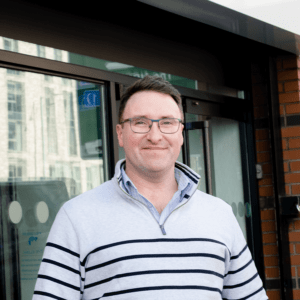
Consultant Ophthalmic Surgeon
Mr. Gerard Reid, MB BCh, BAO, MSc, FRCOphth, is a Consultant Ophthalmic Surgeon specializing in the medical and surgical management of glaucoma. After graduating from Queen’s University Belfast and completing a master’s in Ophthalmology at University College London, he advanced his expertise through specialty training in Northern Ireland and international fellowships, including complex glaucoma surgery at the Birmingham and Midland Eye Centre. Proficient in techniques such as trabeculectomy, aqueous shunt implants, and MIGS, he was appointed Consultant in 2023 and remains active in glaucoma research and teaching.
Here are some frequently asked questions about our cross border cataract scheme.
Cataract surgery is recommended when your vision impairment affects your daily life and cannot be corrected with glasses or contact lenses.
The surgical procedure typically takes around 15-30 minutes per eye.
We provide various advanced techniques, including traditional phacoemulsification and state-of-the-art laser-assisted cataract surgery. The specific type of surgery utilised will be patient-centric and discussed during your initial consultation.
Before surgery, you’ll undergo a comprehensive eye examination and receive preoperative instructions. You’ll also discuss lens implant options with our experts.
While cataract surgery is generally safe and it’s very rare any complications occur, like any surgery there are potential risks such as infection or retinal detachment. Our experienced surgeons will explain these in detail during your consultation.
Yes, the Ramada Hotel, St Annes Square is 2-minute walking distance from our Clinic.
Yes, we encourage patients to have a companion or family member accompany them for support, to both their Consultation and Surgery. During surgery, your companion or family member can wait in our relaxed reception area, or take advantage of the many cafes, shops and local sites within walking distance of our Clinic.
No, the procedure is typically painless. Local anesthesia is used, and you may experience minimal discomfort.
No, our cataract surgeries are outpatient procedures, allowing you to return home the same day.
Most patients can resume light activities within a few days, but please adhere to our post-operative guidelines to ensure a full recovery.