SMILE Visumax 800
Most advanced form of laser eye surgery.
Less than 9 second laser
Less invasive
No more dry eyes
Higher degree of Accuracy
Testimonials
Hear some of the stories from our SMILE VisuMax 800 laser eye patients.
VisuMax 800 Procedure
Below is a guide to the revolutionary VisuMax 800 procedure.
World's Most Advanced Laser Eye Surgery
The Procedure
Cathedral Eye Clinic are the first facility on the island of Ireland to offer the Visumax 800 innovative, highly-advanced SMILE laser eye surgery. The revolutionary technology offers patients vision surgery with an unrivalled level of accuracy and a laser cut time of less than 9 seconds, meaning that professional athletes, amateur sportsmen and everyone in-between can get back to their sport without delay.
VisuMax 800 smile surgery is the latest advancement in SMILE and most technologically advanced form of laser eye surgery available in the world of medicine and eye care. An abbreviation of ‘small incision lenticule extraction’ the VisuMax 800 is the latest stage in the evolution of femtosecond lasers. Indeed, the treatment boasts an unparalleled level of success across the globe. Using only one laser, this revolutionary treatment offers solutions to a variety of eye conditions, removing the patient’s dependency on glasses or corrective lenses.
World's Most Advanced Laser Eye Surgery
What To Expect
Thanks to the combination of the dual benefits of Advanced Surface Ablation (ASA) and LASIK, SMILE surgery has a minimal impact upon the cornea’s structural stability, meaning that if grants the speediest recovery time of any corrective surgery. This is due to the fact that SMILE offers rapid vision correction without the creation of a corneal flap, with the layer of epithelium over the cornea remaining unaffected by the procedure.
SMILE surgery comes as an attractive alternative to patients who may have been deemed unsuitable for other procedures such as LASIK or LASEK/PRK. The advanced procedure offers rapid correction of conditions ranging from long-sightedness to short-sightedness, as well as dry eye symptoms. Furthermore, conservation of the corneal nerves substantially reduces the likelihood of a patient developing dry eye symptoms following their op
VisuMax smile is the most technologically advanced form of laser eye surgery available in the world of medicine and eye care. An abbreviation of ‘small incision lenticule extraction’ SMILE is the latest stage in the evolution of femtosecond lasers. Indeed, the treatment boasts an unparalleled level of success across the globe, despite the fact that it is a recent development. Using only one laser, this revolutionary treatment offers solutions to a variety of eye conditions, removing the patient’s dependency on glasses or corrective lenses.
World's Most Advanced Laser Eye Surgery
Outcomes
- Less than 9 second laser: The SMILE Pro laser component of the new Visumax 800 takes a short 9 seconds.
- Enhanced corneal stability: VisuMax SMILE’s tiny incision allows greater biomechanical stability in the eye compared to that offered by LASIK surgery. This is because the procedure doesn’t require the creation of a corneal flap.
- Less dry eye symptoms: Many laser procedures can encourage the development of dry eyes. However, this advanced procedure substantially reduces this likelihood.
- Less complications: The minimally-invasive nature of SMILE reduces the chances of surgical complications which may occur with procedures such as LASEK.
- Pain-free: This procedure takes roughly 10 minutes per eye. The procedure is painless and can be carried out in the comfort of our state-of-the-art facilities.
- Brief recovery: SMILE offers the speediest of recovery times, with most patients resuming sporting and other activities after only 24 hours.
Benefits of VisuMax 800
The SMILE Pro laser component takes a short 9 seconds.
The Visumax 800 has intelligent systems such as CentraLign (Easy centration with minimal effort) and OcuLign (for cyclotorsion adjustment). This allows for greater accuracy.
SMILE’s small incision allows improved biomechanical stability compared to that offered by LASIK surgery (thanks to the absence of a corneal flap in the operation).
Laser eye treatments often lead to the development of dry eye symptoms. However, the minimally-invasive nature of SMILE drastically reduces the chances of this occurring.
From beginning to end, SMILE takes approximately ten minutes per eye, with the lasering element of the operation taking roughly 25 seconds to complete. This can be enjoyed in the comfort of our sterile, secure and comfortable facility.
SMILE is the most minimally-invasive eye procedure available in modern medicine, with a tiny 2mm keyhole incision.
Treatment journey
Your 5 step journey to visual excellence.
Stage 1
Initial assessment
A thorough and in-depth initial assessment is performed to determine if you are a suitable candidate for your preferred treatment
Stage 2
Meet your consultant
At this meeting with your Surgeon, we will identify and discuss a recommended, fully personalised treatment pathway.
Stage 3
Finalise your treatment
You’ll meet our Patient Care Manager to discuss treatment details and financial arrangements during your visit.
Stage 4
Have your treatment
On your procedure day, our Nurse and Clinical Team ensure your comfort, making the virtually painless surgery a swift experience.
Stage 5
Comprehensive aftercare
Our aftercare package ensures safety and successful treatment, including one year of post-treatment care for select laser eye surgery procedure.
JP HALE SMILE Laser Eye Surgery Experience
Watch as Irish Elite Champion boxer JP Hale undergoes SMILE laser eye surgery at Cathedral Eye.
SMILE Laser Eye Surgery Experience
Watch as Irish Elite Champion boxer JP Hale undergoes SMILE laser eye surgery at Cathedral Eye.
World-Class SMILE Laser Eye Surgeons and Practitioners
Our team of specialised Consultant Ophthalmologists and Surgeons offer world-class patient experiences and outcomes for SMILE Laser Eye Surgery.
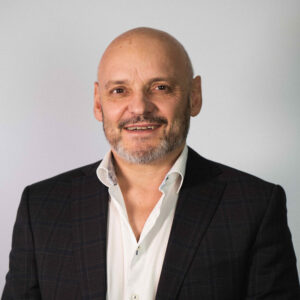
Prof. Jonathan Moore
Consultant Ophthalmic Surgeon
Profile
Professor Johnny Moore is a renowned Consultant Ophthalmic Surgeon specialising in cataract surgery and advanced intraocular procedures, with over 25,000 successful treatments to his name. As Clinical Director of Cathedral Eye Clinic in Belfast, Prof. Moore combines his extensive surgical expertise with a passion for teaching and innovation. He has been pivotal in advancing cataract surgery techniques, including the development of precise intraocular lens (IOL) power prediction methods and the integration of cutting-edge laser technologies. Prof. Moore also spearheads global cataract surgery education through online training platforms and partnerships with organizations in underserved regions, ensuring access to high-quality surgical knowledge worldwide.

Mr Niraj Mandal
Consultant Ophthalmic Surgeon
Profile
Mr. Mandal, an esteemed ophthalmic surgeon, has performed over 3,000 eye procedures and consulted with more than 8,000 patients, specialising in cataract surgery and refractive lens exchange. With advanced training from institutions like Moorfields Eye Hospital and the University of British Columbia, he brings a wealth of expertise in complex corneal and cataract cases. A Fellow of both the European and Royal Colleges of Ophthalmology, he combines precision surgical skills with a passion for innovation, evident through his global contributions and research in ocular health. Patients benefit from his exceptional care and commitment to improving vision worldwide.
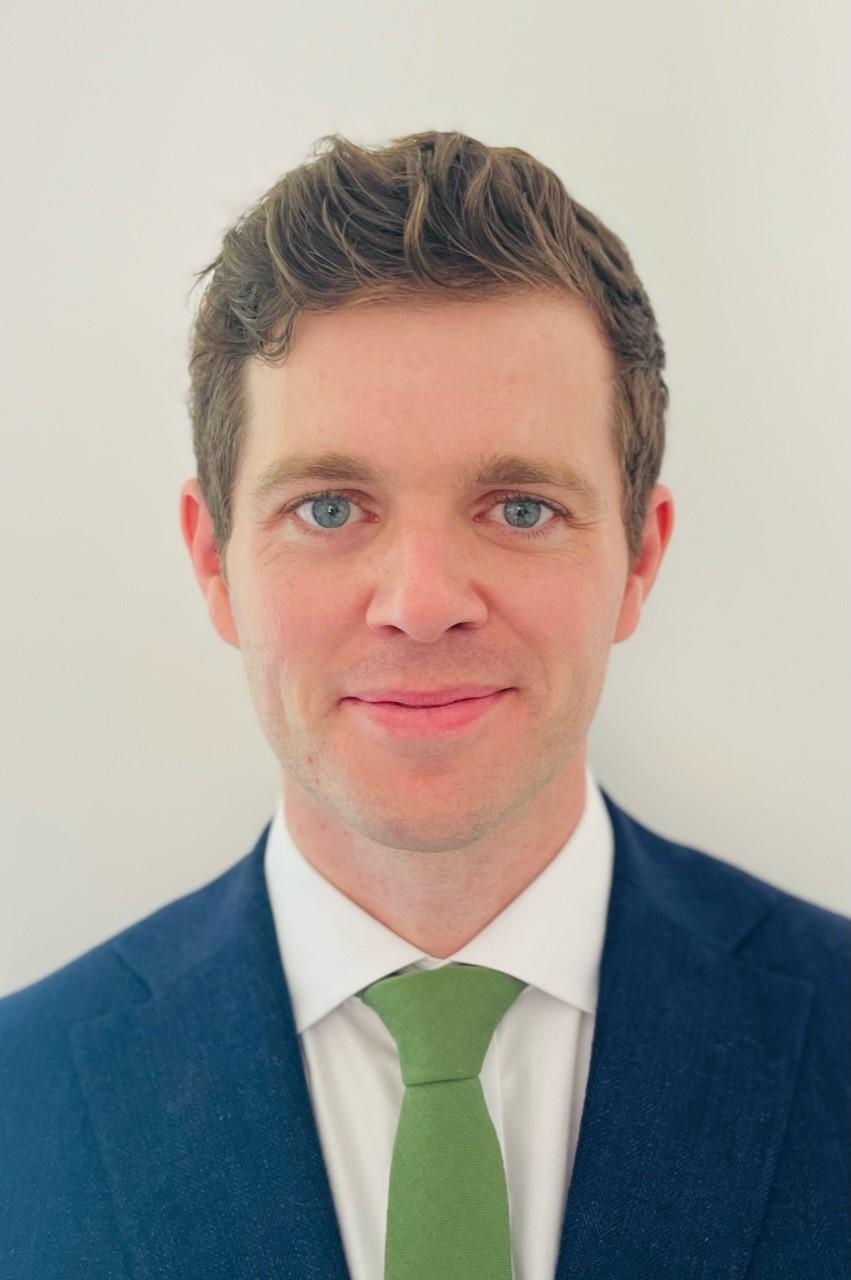
Mr Stephen Stewart
Consultant Ophthalmic Surgeon
Profile
Mr Stephen Stewart, MBBS MA PgDipCRS CertLRS FRCOphth, is a Consultant Ophthalmic Surgeon specialising in cataract surgery, including complex cases and astigmatism correction. A graduate of Cambridge and UCL, he trained in Northern Ireland and completed advanced fellowships in Belfast and Singapore. A Fellow of the Royal College of Ophthalmologists, he holds a Postgraduate Diploma in Cataract Surgery and actively contributes to the National Ophthalmology Database Audit. Stephen is also involved in research on machine learning for cataract outcomes and has provided cataract surgery in resource-limited settings with the Khmer Sight Foundation.
Common questions
Here are some frequently asked questions from laser eye patients just like you.
In the vast majority of cases, the procedure is totally painless, and there is little or no discomfort. Immediately after the procedure, your eye may feel a little gritty and sore, and your vision can be a bit misty. However, the eye will rapidly begin to heal and recover over the next few days.
Generally speaking, complications associated with laser refractive surgery are extremely rare. When they do occur, in the vast majority of cases, we can manage them well. The main symptom that patients experience is dry eye. Again, in the vast majority of cases, by the three-month mark, the symptoms will have totally resolved. We can usually treat the dry eye with drops or other medications that can alleviate the symptoms.
Here at Cathedral Eye Clinic, we’re one of the only eye clinics in Ireland that can offer laser surgery to correct presbyopia. Presbyopia is the condition that all patients will typically experience between the ages of about 45 and 60, where we lose our reading vision. Traditionally, this has been approached using lens replacement surgery. However, here at Cathedral Eye, we offer a laser corrective procedure, a refractive procedure that blends your vision to provide both distance vision and near vision without the need for invasive lens surgery.
Typically, following your laser refractive procedure, recovery time is very fast, and the vast majority of patients usually resume their normal day-to-day activities within just a few days of the procedure. There will be some limitations that we will provide advice and information about, including what to avoid and what you can or can’t do. But generally speaking, recovery times are extremely short.
Depending on the precise type of refractive procedure you undertake, your age at the time of the procedure, and your prescription, in the vast majority of cases, your prescription will remain stable for many years after the surgery. In a small proportion of cases, you may require an enhancement or a touch-up surgery at some point. Additionally, if you develop a cataract, you may need lens surgery to maintain your prescription.
There is a small proportion of patients who won’t be suitable for SMILE laser eye surgery. This may be based on your prescription or other factors, such as having a very thin cornea or other medical conditions that could make SMILE surgery unsafe. Generally speaking, we perform laser surgery on patients after the age of 21. The main reason is that we want their prescription for glasses and contact lenses to be as stable as possible before performing the surgery to obtain a more accurate result.